Restaurant or Building Down? Commercial Plumbing in Buena Park
Which properties call, and what each one tends to need
The call dispatchually comes from a person with a business to run: a kitchen drain backing up during service, a tenant reporting no hot water, or a ceiling stain in a retail unit. Commercial plumbing in Buena Park covers restaurants and commercial kitchens, apartment and multifamily buildings, hotels, and light commercial, light industrial and cold storage sites.
The City describes a hotel and entertainment corridor anchored by Knott's Berry Farm, and about 100 manufacturing and warehousing firms. Housing data adds another picture: multifamily homes are about 32.8 percent of units, and 6,504 units sit in buildings of five or more.
Each property type fails in its own way. Restaurants fight grease and floor drains. Apartment buildings deal with shared stacks, water heaters serving many units and tenant versus owner questions. Hotels run large heating and hot water loads around the clock. Light commercial units usually share walls and utilities with neighbors.
| Property | Common calls | Worth asking |
|---|---|---|
| Restaurant or commercial kitchen | Grease traps, floor drains, kitchen sinks, water heaters | How often traps should be serviced and how it is documented |
| Apartment or multifamily building | Shared drain stacks, leaks between units, water heaters | Who owns each line, and how tenants are notified |
| Hotel or lodging | Hot water supply, drains, leaks in rooms | Which rooms or floors a shutoff isolates |
| Light commercial or industrial | Restrooms, drains, water lines, heaters | What the building shares with neighbors |
Multifamily is a third of the housing
The City's draft housing element puts about 32.8 percent of housing units in multifamily buildings, with 6,504 units in buildings of five or more.
Shared plumbing is common in those buildings, so a leak or backup can affect more than one household.
Housing Element (2021-2029 draft), unit-type table, City of Buena Park.
Grease traps, floor drains and kitchen lines
A kitchen drain that fails during service costs a restaurant more than the repair. Grease does most of the damage. It cools in the pipes, builds layers, and combines with food solids until the line clogs.
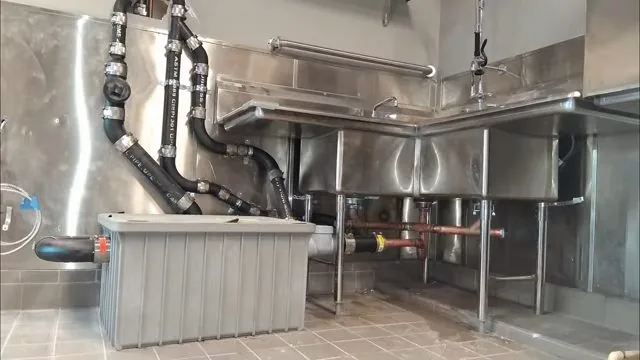
A grease trap or interceptor catches grease before it reaches the sewer. It has to be cleaned on a schedule or it passes grease along or backs up.
Ask your provider how often the trap should be serviced, who hauls the waste and what record is kept, because inspectors may ask to see it. Commercial drain cleaning also means clearing floor drains, sinks, prep lines and mop sinks, often with a jetter that scours pipe walls.
Kitchen exhaust hood drains and dishwasher lines are part of the same system. Ask whether the plumber will inspect them with a camera if clogs return. The clearing methods for clogged lines explains clearing methods and when a camera helps.
Leaks in a commercial building: who pays, who shuts off, what to document
A leak in a building raises questions that a house does not. Which section can be shut off without closing the business? Whose line is leaking, the owner's or a tenant's? What does the insurer or landlord need to see?
Commercial leak detection starts with locating the leak, using the same tools as in a home: listening equipment, thermal imaging and moisture meters. The plumber should note where the leak is, what valves isolate it and how long the line was leaking if the signs show it. The how plumbers find hidden leaks explains the methods.
Ask for a written report with photos. Tenants should tell the property manager the same day, because leases usually set a notice period. Slab and sewer problems in a commercial building follow the same patterns as in a home. If a pipe has burst or a slab is leaking, see the burst pipe page and the slab leak detection.
After hours, emergencies and what to promise
Our dispatch line answers at every hour, including nights, weekends and holidays. A plumber from our team or an independent plumber in the network is sent to serve your address. No arrival time is promised by phone, because it depends on demand, traffic and the plumber's location.
Tell dispatch whether water is still running, whether sewage is backing up and whether the property is open to the public. A closed kitchen or a flooded hallway is handled differently from a slow drain in an office. If the building has an after-hours contact or a property manager, give dispatch that name and number, since access to a locked mechanical room often decides how fast a plumber can start.
For water already in carpet, walls or ceilings, see the water damage restoration page, which has its own phone line for cleanup and drying.
Water heaters, filtration and maintenance contracts
A commercial water heater serves more people and works harder than a home unit. In a restaurant it supplies the dish machine and sinks. In an apartment building it may serve every unit. Repair and replacement follow the same logic as in homes, with a larger scale. The basics for tank units are on the heater repair page.
Water treatment matters for businesses too. A commercial water softener protects heaters and dish machines from scale. A commercial reverse osmosis system gives clean water for coffee, ice and cooking.
Commercial ice machine filtration service and a commercial kitchen water filter keep equipment working and flavor clean. The water softener and filtration page explains the options, and the City's water report puts hardness near 12 grains per gallon from wells and 9.4 from imported supply.
Maintenance contracts make sense for properties with heavy daily use. A good contract lists what is inspected, how often, what is included and how emergency calls are handled. Ask for it in writing, and ask what happens if a trap or valve fails between visits.
Permits and licensing for larger work
Larger commercial jobs, such as a new grease interceptor, a water heater swap in a building, or a gas line extension, may need a permit. No City page lays out the commercial rule, so call the Building Division, (714) 562-3636, and have your plumber say who applies.
Plumbing work that needs a building permit requires a licensed contractor. Contractor class C-36 includes water heaters, gas piping and water and gas service piping, and the state board's website lets you check a class. Ask for license details from dispatch on request before work begins.
Commercial gas work, including kitchen equipment hookups, belongs to a licensed gas contractor, and the gas line basics explains what to ask. Industrial and large-scale work may require a different class of contractor, and dispatch will tell you if a job is outside what the network handles.
Business plumbing questions
What does restaurant and commercial kitchen plumbing involve?
It covers kitchen sinks, floor drains, grease traps, dish machine connections, water heaters and gas lines for cooking equipment. Grease causes most clogs, so drain cleaning and trap service are common calls.
Tell dispatch whether you are open and whether water or sewage is spilling.
How often does a grease trap need service?
It depends on kitchen volume and trap size, so ask the provider and check the manufacturer's instructions. A trap that is full passes grease into the line or backs up into the kitchen.
Ask for a service record for every cleaning in case an inspector asks.
What should I do when a commercial floor drain overflows?
Stop using water and sinks that drain to it, keep staff and customers away from the spill, and call. A floor drain that overflows often means a blockage downstream, not just in the drain itself.
A camera inspection can show where the line is blocked.
How do I find a leak in a commercial building?
Start by checking the water meter with fixtures off. A moving meter means a leak. A plumber can locate the leak with listening equipment, thermal imaging or moisture meters and tell you which valve isolates it.
Notify the property manager if you are a tenant, and ask for a written report.
Business plumbing trouble?
Name the type of building, say what is happening and whether you are open. A plumber can explain what to shut off and what to expect.
Related business plumbing
- Drain cleaningClogs and jetting methods
- Leak detectionLocating leaks before opening walls
- Water damage restorationCleanup and drying after a failure
- Water softeners and filtrationScale and filtration for equipment
- Gas line repairGas hookups for kitchen equipment
Need residential help instead? See the residential service pages or the cities on the list.