Spots and Scale Everywhere? Water Softener Installation in Buena Park
How hard is your water? What the City reports
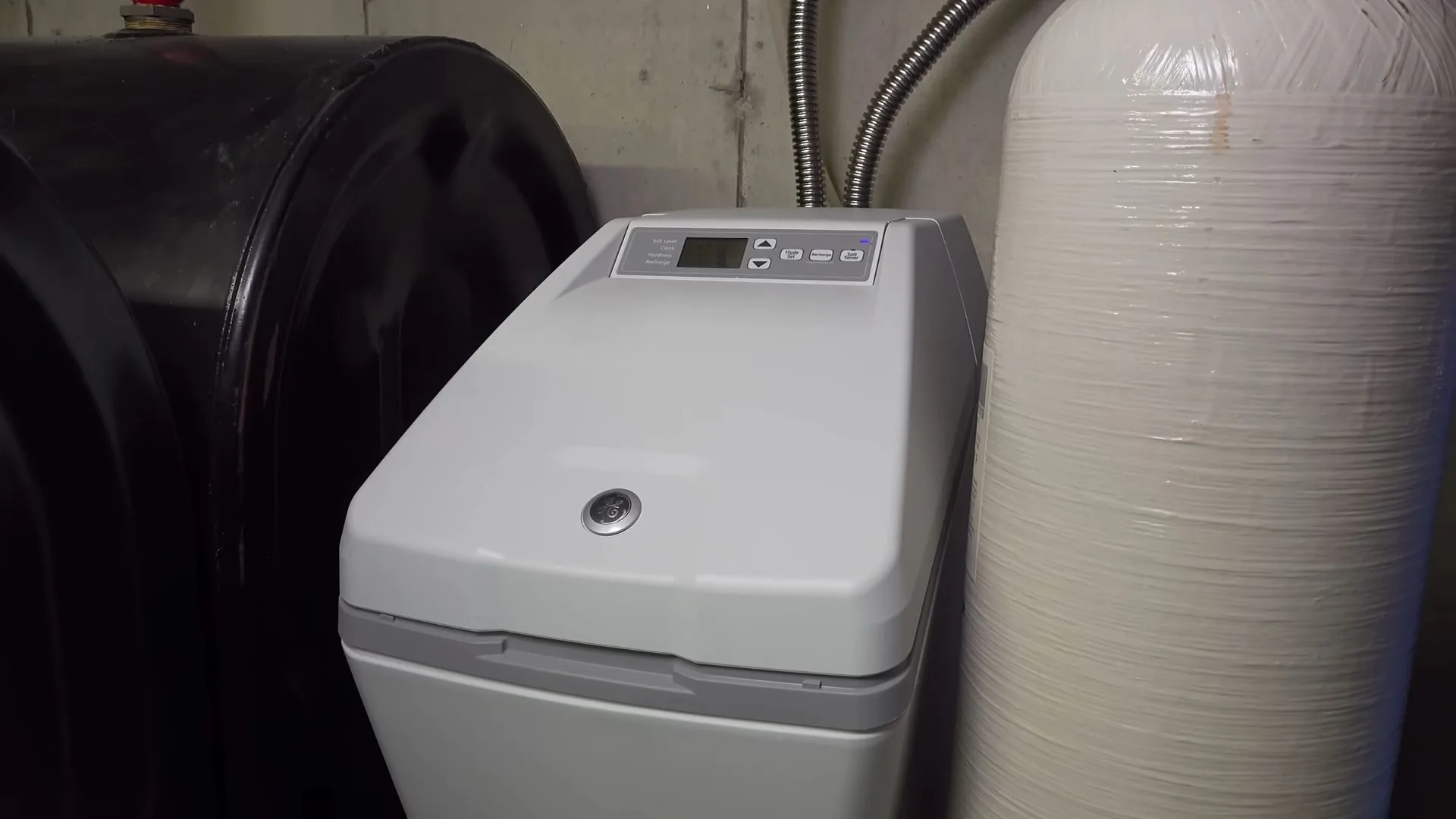
A water softener is a treatment system that removes the minerals that cause scale, usually calcium and magnesium. It suits homes where white crust builds on faucets, glass comes out of the dishwasher spotted, and heaters age early. Whether your home needs one starts with a number.
In the City's 2024 water quality report, groundwater averages 204 mg/L hardness (close to 12 grains per gallon), imported water averages 160 mg/L (close to 9.4 grains), and individual samples span 44 to 306 mg/L (2.6 to 18 grains).
The City is the supplier, and its Water Department can be reached at (714) 562-3655. The report does not say which street receives which blend, so the number at your tap can differ.
Hard water signs include scale on fixtures and shower glass, a film on skin and hair, soap that will not lather, and a water heater that rumbles. Testing is simple. A plumber can test your tap with a hardness kit and explain the reading. Scale shortens the life of tank heaters, which the heaters aged by scale explains in more detail.
Groundwater hardness, annual average
Average hardness is 204 mg/L (roughly 12 grains per gallon) in groundwater and 160 mg/L (roughly 9.4) in imported supply, and readings reach 306 mg/L (18 grains).
No classification word is applied here, because the report does not give one.
Hardness figures: 2024 Water Quality Report of the City Water Department (2023 samples).
Softener, filter or reverse osmosis: what each one does
The words get mixed up. A softener treats hardness. A filter treats other things. They are not the same system, and a home may need one, both or neither.
An ion exchange water softener swaps hardness minerals for sodium or potassium, using resin beads that are recharged with brine. It protects pipes, heaters and fixtures from scale. A sediment water filter catches sand and rust particles. A carbon filter improves taste and removes chlorine.
Reverse osmosis pushes water through a fine membrane to clean drinking water, usually at one tap. An under-sink reverse osmosis system treats a single faucet, while a whole-house system treats everything and costs more to install and maintain.
Water treatment, also called conditioning, covers all of these. Water filtration installation in Buena Park starts by deciding what problem you want to solve: scale, taste, particles, or all of them.
| System | Treats | Does not treat |
|---|---|---|
| Ion exchange softener | Hardness minerals that cause scale | Taste, chlorine or particles |
| No-salt conditioner | Changes how scale forms so it clings less | Does not remove hardness minerals |
| Sediment filter | Sand, rust and visible particles | Dissolved minerals or taste |
| Carbon filter | Chlorine, taste and odor | Hardness |
| Reverse osmosis | Dissolved solids at the drinking tap | Whole-house scale (unless sized for it) |
Salt-based softener or no-salt conditioner? Choosing a system
A salt-based softener removes hardness. A no-salt conditioner, sometimes called a template-assisted crystallization unit, does not remove hardness but changes how minerals behave so less scale sticks. Each has a place, and neither suits every home.
Salt softeners use salt or potassium and discharge brine to the drain during regeneration. State law lets local sewer agencies restrict some softeners that discharge salt, and no local rule for Buena Park was found, so ask the City or the plumber before choosing a salt-based system. A no-salt conditioner avoids the brine discharge, but it does not make water feel soft in the same way.
Sizing depends on household size, the hardness reading and daily water use. A plumber can size the tank so it does not regenerate too often, and place it where it has a drain, a power outlet and a bypass valve. Water softener installation in Buena Park often needs a drain connection and a short run of new piping at the main line.
Whole-house filtration and under-sink reverse osmosis
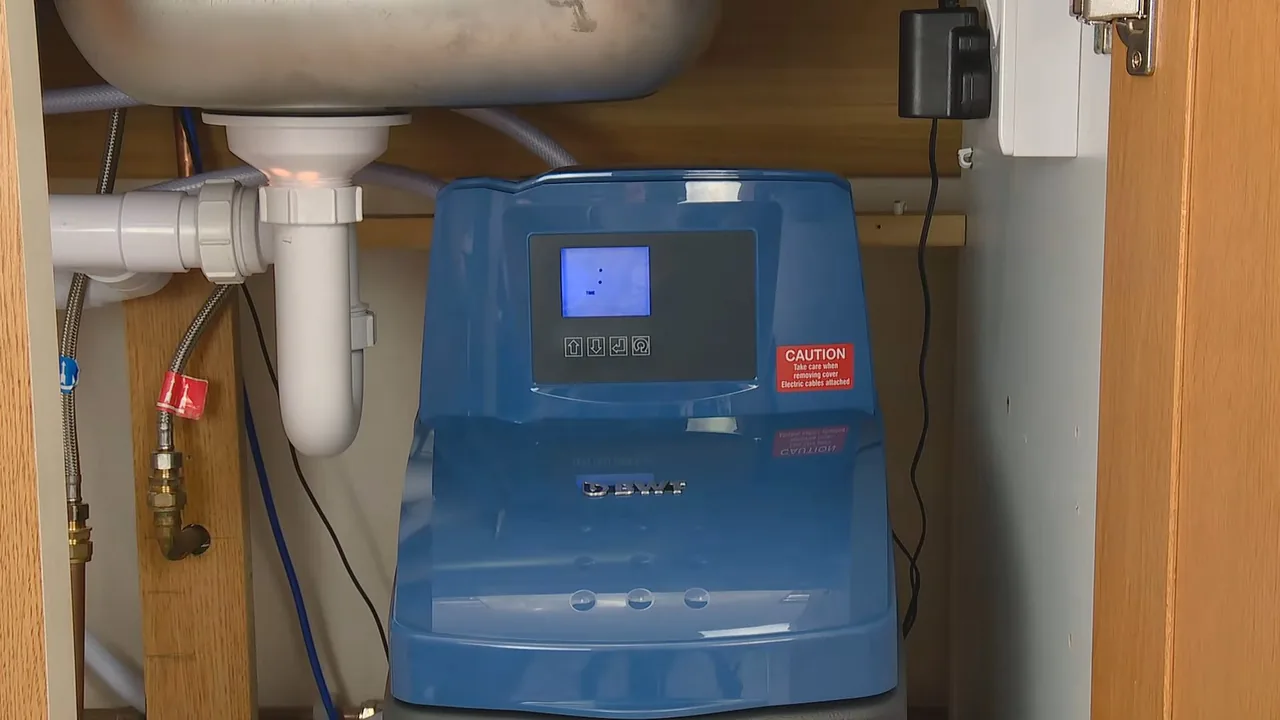
A whole-house filter sits at the main line and treats every tap. It is the right choice for sediment, chlorine and odor across the house. An under-sink reverse osmosis system treats the kitchen tap for drinking and cooking, with a small tank and a dedicated faucet.
Reverse osmosis system installation in Buena Park needs space under the sink, a cold-water supply, a drain saddle and room for the tank. Filters and membranes need replacing on a schedule set by the maker. A refrigerator water line can connect to an RO system, and ice makers often need a separate filter.
Whole-house RO exists, but it is large and needs a storage tank and booster pump. Ask the plumber why a whole-house system fits your home before agreeing to one. For a business, see commercial water treatment, which covers restaurant and ice machine filtration.
Softener repair and service: salt bridges, resin and valves
A softener that stops working usually has a simple cause. A salt bridge is a hard crust that forms in the brine tank and stops salt from dissolving, so the unit runs but water stays hard. Breaking the bridge with a broom handle can restore it. A clogged injector, a stuck valve or worn resin beads are other common causes.
Water softener service in Buena Park starts with a hardness test before and after the unit. The plumber then checks the salt level, the brine well, the control head, the bypass valve and the drain line. If the brine tank overflows, it is often a clogged drain line or a faulty float, and the overflow can flood a garage or closet.
Resin lasts for years but wears out, and hard water at the tap despite a full salt tank is a sign. Ask what the repair will involve and compare it with the cost of replacement for an old unit. Water softener maintenance means checking salt, cleaning the brine tank when needed and watching for odd noises.
Keep hands and tools out of the brine well. If something has dropped in, turn off the water to the softener and call. A flooded tank can also soak the floor, so switch off power to the control head.
Water treatment FAQs
Do I need a water softener or a filter?
A softener treats hardness, which causes scale. A filter treats particles, taste or chlorine. If your concern is white crust on fixtures and spotty glassware, a softener or conditioner fits. If your concern is taste, a filter or reverse osmosis fits.
Ask a plumber to test your tap water before you choose.
What should I do if something falls into the brine well?
Turn off the water to the softener and the power to its control head. Do not reach into the well with a bare hand. Use a long magnet or grabber if the item is reachable and leave the rest to a plumber.
A box cutter or other sharp item should be removed carefully, and the brine tank checked for damage.
Why did my softener overflow near the refrigerator?
Overflows usually come from a clogged drain line, a stuck float or a failed valve. If a fridge water line sits nearby, check it for leaks too, since a softener overflow can mimic a fridge leak.
Shut off the water to the softener and call a plumber to trace which one is leaking.
How can I tell if my water is hard?
White crust on faucets, spots on glass, soap that will not lather and a water heater that rumbles are all signs. Groundwater averages near 12 grains and imported water near 9.4 grains per gallon.
A hardness test kit gives a reading at your tap. Ask a plumber to test and explain the result.
What is water conditioning?
Conditioning changes how hardness minerals behave without removing them, so scale clings less. Softening removes the minerals by ion exchange. Both are forms of water treatment.
Ask a plumber which fits your water and your drain situation.
Hard water wearing things out?
Describe the scale you see and what you would like to treat. A plumber can test the water, explain the choices and size a system.
Where scale shows up
- Water heater repairScale in tank heaters
- Tankless water heatersDescaling and flushing
- Toilet and faucet repairFixtures worn by scale
- Commercial plumbingWater treatment for businesses
- Water line repairPressure and the main line
Need another fix? Open the services overview or scan the towns served.