Tank or Tankless? Tankless Water Heater Installation in Buena Park
Is tankless a fit for your home? Peak demand comes first
The decision starts with a question about mornings. How many showers, dishwashers and washers run at once? A tankless unit has no storage, so it heats as water flows, and its limit is how much water it can heat per minute, not how many gallons a tank holds.
A small household with one or two baths can often do well on a single tankless unit. A large household that runs several fixtures together may need a bigger unit or two. Ask the plumber to add up the fixtures that run at the same time and compare that to the unit's flow rating at your incoming water temperature.
Tankless water heater installation also depends on the incoming gas supply. A unit that fires at a high rate needs a gas line that can deliver, which is a different matter from the tank heater it replaces. No savings figure is promised here, because what you save depends on how your household uses hot water.
| Question | Why it matters | Who answers it |
|---|---|---|
| How many fixtures run together? | Sets the flow the unit must heat | You and the plumber |
| Is the existing gas line large enough? | A high-input unit may need a larger line | Plumber or gas fitter |
| Where will the vent go? | Exhaust must reach outdoors safely | Plumber, following the manufacturer's instructions |
| Is there a drain for condensate? | Some units produce acidic condensate that must drain | Plumber |
What changes in the house when a tankless unit goes in
Replacing a tank with a tankless heater is more than a swap. The new unit hangs on a wall, so the old floor space opens up, but the connections around it change.
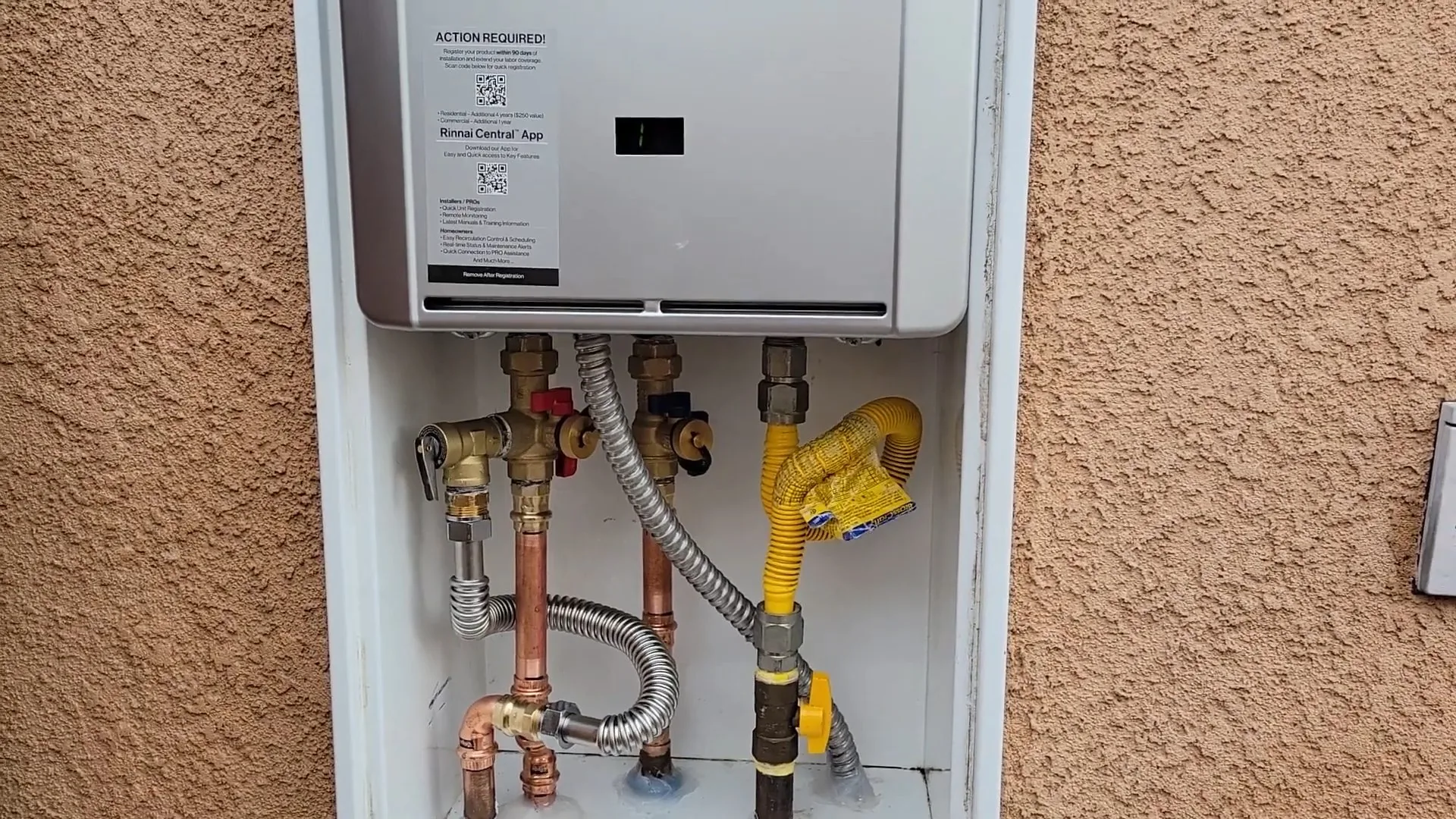
A gas tankless heater usually needs a larger gas line, a sealed or direct vent through a wall or roof, a condensate drain for high-efficiency models, an electrical outlet for the controls, and isolation valves for flushing.
An electric tankless unit draws a large electrical load and often needs a heavy circuit, which an electrician installs. Ask the plumber who does each piece, and whether the quote covers gas piping, venting and electrical or only the unit.
Replacement and conversion from a tank is common. The gas line sizing and repair page explains how a larger line is run and tested. If you are weighing both options, the tank replacement page lays out the standard tank choice.
If you smell gas near a new or old heater, get outside and phone SoCalGas at 1-800-427-2200. Do not switch lights on or off, and call a plumber only after the building is safe.
Flushing and descaling: why hard water makes it a maintenance item
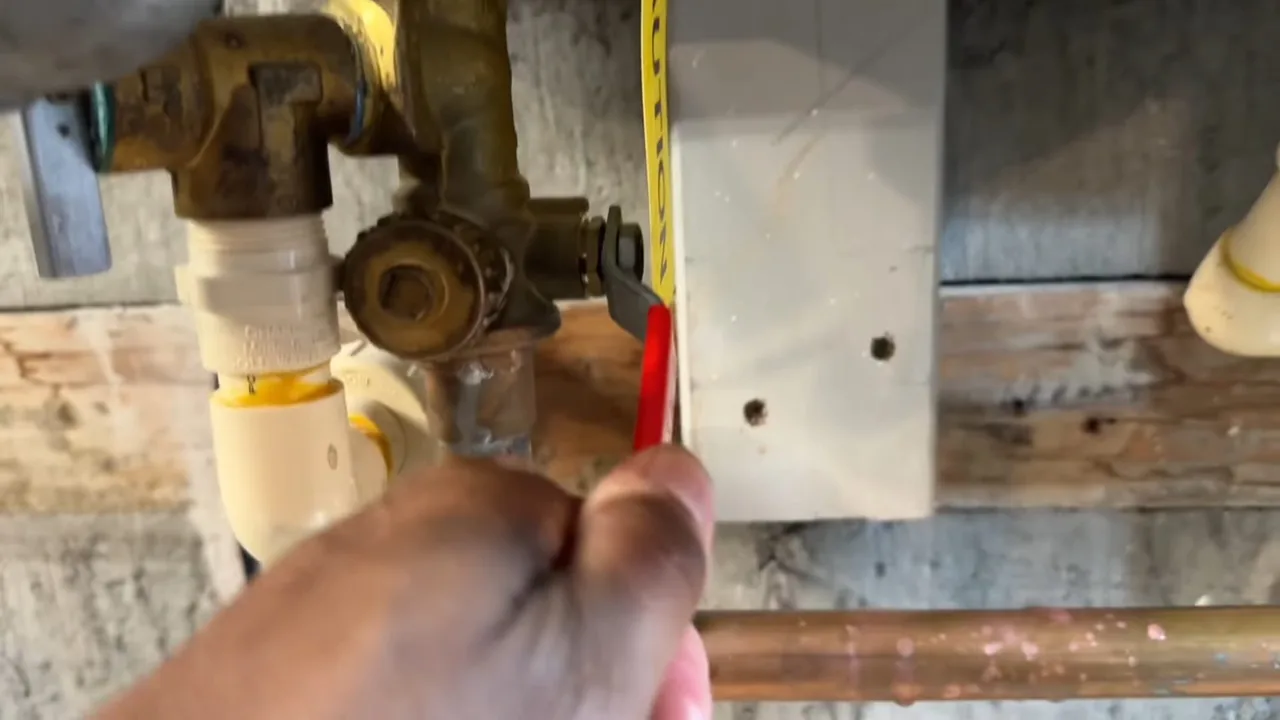
Tankless units have narrow passages in the heat exchanger. Minerals in the water coat those passages, the unit heats less well, and errors or noise follow. A tankless water heater flush circulates a descaling solution through the unit, using the isolation valves, and rinses it out.
City testing shows hardness averaging about 9.4 grains per gallon in imported water and 12 in groundwater. At that level, flushing is a reasonable item for a maintenance schedule, and a plumber can tell you how often it fits your unit and water. The manufacturer's instructions set the baseline, so ask for it.
Tankless water heater maintenance also includes cleaning the inlet filter, checking the vent and testing the safety shutoffs. A flush that skips the isolation valves cannot be done properly, which is why those valves belong in the original installation.
Some homes pair a tankless water heater with a reverse osmosis filter at the kitchen tap. That is a separate drinking-water system, not part of the heater, and filtration options are covered elsewhere. If scale keeps returning, the treating scale at the source covers treatment at the source.
Hardness the heat exchanger sees
City figures put imported water near 9.4 grains per gallon and groundwater near 12, with individual readings up to 18. Those numbers explain why descaling shows up in a tankless maintenance plan.
Ask how often to flush and whether the unit has isolation valves.
Figures from the Water Department's 2024 water quality report, based on 2023 samples.
Repair or replace an existing tankless unit?
Tankless units fail quietly. You may see an error code on the display, water that runs lukewarm, or a unit that fires and shuts off. These point to a few common causes: a scaled heat exchanger, a failed flow sensor, a clogged filter, a vent or gas supply problem, or an igniter that has worn out.
Tankless water heater repair starts with the code. Write down the code and the model before you call, because the plumber can often tell you what it means before arriving. A flush often fixes a scale-related code. A failed sensor is a small part. A cracked heat exchanger usually means replacement.
Ask what the plumber found and what the repair costs compared with a new unit, then decide with the unit's age in mind. If a unit is past the manufacturer's expected life, a major repair may not pay off. Brands differ in parts and support, so mention yours when you call, and ask about replacement parts before agreeing to a repair.
Permits, inspection and who may work on gas piping
Gas and venting changes are the part of tankless work most likely to need a permit and an inspection. No City page states Buena Park's rule for a tankless install, so the right step is to ask. The Building Division is at 6650 Beach Blvd, (714) 562-3636.
Gas piping sits inside the C-36 contractor class, as do water heaters and service piping. A permitted job needs a licensed contractor, so check the class on the state board's site and ask whether the quote includes the permit and a final inspection.
Manufacturer instructions matter here too. A tankless heater installed to the wrong vent length or the wrong gas pressure can fail or be unsafe. Ask to see the installation plan in writing, including vent type, gas line size and condensate drain.
Tankless questions, answered
What does a tankless water heater do differently?
It heats water as it flows through the unit and has no storage tank. When you open a hot tap, a sensor starts the burner or the elements, and water leaves hot until you close the tap.
The result is a smaller unit and no standby tank, but a limit on how many fixtures it can serve at once. Ask the plumber to size it to your household.
Tankless or tank: which is better for my house?
It depends on space, demand and what the house already has. A tank is simple and fits existing connections. A tankless unit saves floor space and can serve a steady flow, but it may need a larger gas line, a new vent and a descaling plan.
Ask the installer to list what each option changes in your home and what each needs for upkeep.
Can I replace my tank heater with a tankless unit?
Usually yes, with changes. The gas line may need to be larger, the vent will be different, and a condensate drain and electrical outlet may be needed.
The plumber should walk through each of those before quoting, and tell you who handles the gas, venting and electrical work.
How often should a tankless water heater be flushed?
The manufacturer's instructions set the baseline, and hard water shortens the interval. Buena Park water averages about 9.4 to 12 grains per gallon, so annual descaling is a common starting point to ask about.
A flush needs isolation valves on the unit. If yours has none, ask to have them added.
Weighing a tankless upgrade?
Tell dispatch what you have now and what you want to change. Whoever takes the call can walk you through the gas, venting and electrical side of the job.
If you are comparing options
- Water heater replacementStandard tank swaps and sizing
- Gas line repairSizing the gas line for a high-input unit
- Water softeners and filtrationTreating scale before it reaches the unit
- Water heater repairTank units that need a repair
- All plumbing servicesThe full list of services
Want to see the rest? Open the plumbing services menu or find your town under the areas served.